
Stone saw blades often encounter heating and wear issues during the cutting process, which significantly affect cutting efficiency and the lifespan of the saw blade. High - temperature accumulation and frequent vibrations are the main culprits. According to industry data, in continuous cutting operations, the temperature of a stone saw blade can rise to over 300°C within 10 minutes, which accelerates the wear of the saw blade teeth. When the saw blade is worn, the cutting efficiency can drop by about 30%, and the quality of the cut surface also deteriorates.
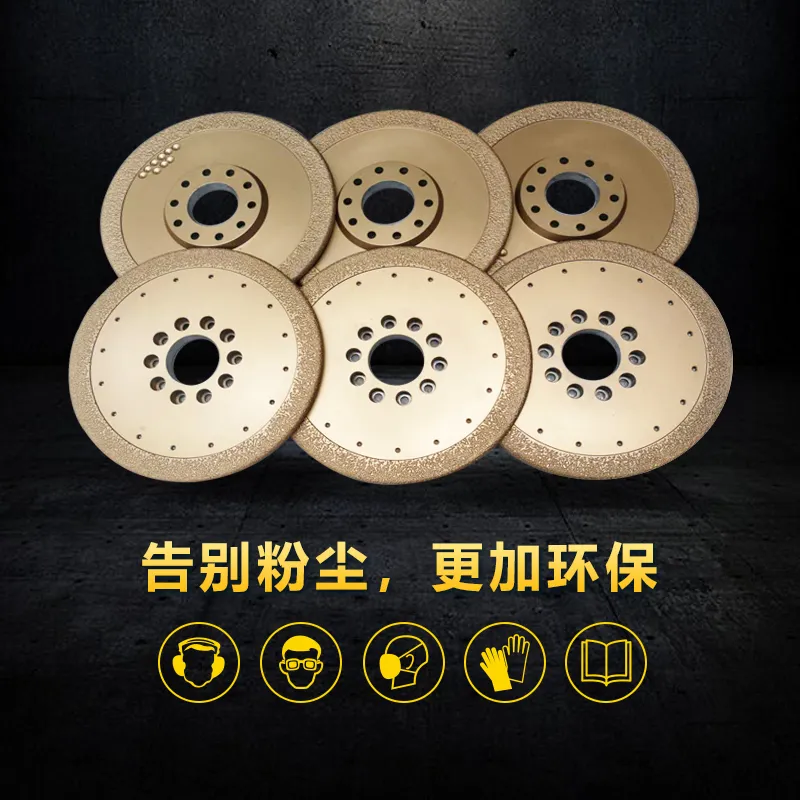
High - efficiency heat sinks play a crucial role in the saw blade structure. They are designed to quickly dissipate the heat generated during cutting. By increasing the surface area for heat exchange, heat sinks can reduce the temperature of the saw blade by up to 50%. This not only extends the service life of the saw blade but also improves cutting accuracy. For example, in a test of a saw blade with a high - efficiency heat sink, the saw blade could maintain stable performance for over 50 hours of continuous cutting, while a regular saw blade without a heat sink could only last about 20 hours.
Cutting speed and pressure have a direct impact on temperature control. When the cutting speed is too high, the friction between the saw blade and the stone increases, resulting in more heat generation. Tests show that increasing the cutting speed by 20% can cause the temperature of the saw blade to rise by about 20 - 30°C. Similarly, excessive pressure can also lead to overheating. Adjusting the cutting speed to an appropriate range (e.g., 30 - 50 m/s for most stone materials) and keeping the pressure stable can effectively control the temperature of the saw blade.
Wet cutting and dry cutting are two common cutting methods. Wet cutting uses water to cool the saw blade, which can reduce the temperature of the saw blade by about 70 - 80%. Dry cutting, on the other hand, is more suitable for some special applications but requires more attention to temperature control. Switching between wet and dry cutting according to the specific situation can optimize the cutting process.
Proper installation of the saw blade is essential. Ensure that the saw blade is centered and tightly fixed. Incorrect installation can cause uneven stress on the saw blade, leading to increased vibration and heat generation. During operation, follow the correct operating procedures, such as starting and stopping the saw blade smoothly, to reduce unnecessary wear and tear.
Vibration not only affects the cutting quality but also accelerates the wear of the saw blade. Using shock - absorbing pads and adjusting the cutting machine to the correct balance can reduce vibration by about 30 - 40%. This also helps to reduce noise levels, creating a more comfortable working environment.
Based on real - world industry experience, safety should always be the top priority. Operators should wear appropriate protective equipment, such as goggles and gloves. Regularly inspect the saw blade for signs of wear and damage. By following safety regulations and improving cutting accuracy, the production efficiency and product quality can be significantly enhanced.
In conclusion, by understanding the causes of stone saw blade heating and wear, utilizing high - efficiency heat sinks, adjusting cutting parameters, and mastering practical operation skills, stone processing technicians and operators can effectively extend the lifespan of saw blades, improve cutting efficiency, and enhance the competitiveness of their production. If you want to learn more about how to improve the efficiency of stone saw blades and extend their service life, click here.





.png?x-oss-process=image/resize,h_100,m_lfit/format,webp)
.png?x-oss-process=image/resize,h_100,m_lfit/format,webp)
.png?x-oss-process=image/resize,h_100,m_lfit/format,webp)


