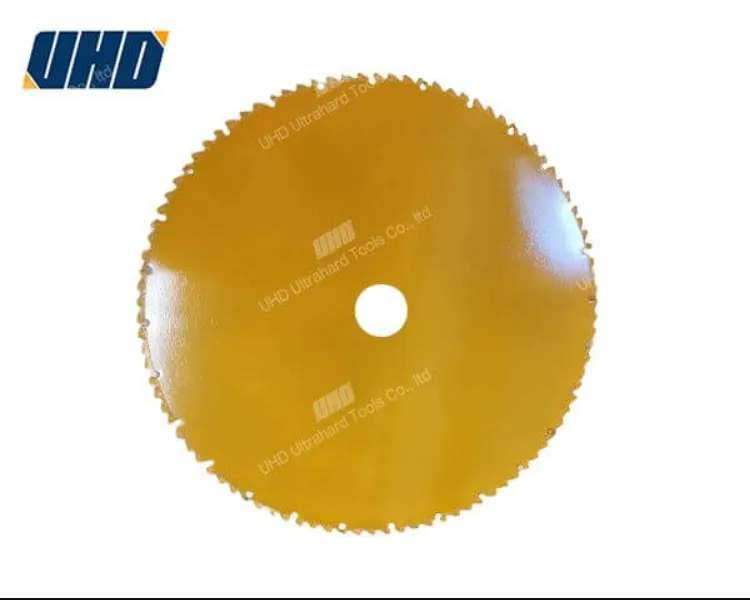
In the realm of stone processing, the choice of cutting tools and the mastery of cutting techniques are crucial for achieving high - quality products and maximizing efficiency. This article delves into the wear mechanism of multi - material cutting saw blades and offers maintenance tips, with a special focus on the Youde Super Hard 400H brazed diamond saw blade.
Let's start with a real - world scenario. In a large - scale construction project involving the use of various stones, a stone processing company faced significant issues during the cutting process. They encountered problems such as chipping and scratching on the surface of the cut stones, which not only affected the aesthetics but also reduced the product's market value. According to industry statistics, approximately 30% of stone processing enterprises experience similar cutting problems, leading to a decrease in product yield by about 15%.
Ceramic tiles are known for their high hardness and brittleness. Their surface often has a glazed layer, which can cause uneven wear on the saw blade. The high - hardness minerals in ceramic tiles lead to accelerated wear of the diamond segments on the saw blade. For example, in a factory that processes ceramic tiles, it was found that the saw blade needed to be replaced 20% more frequently than when cutting softer stones.
Marble is a relatively soft stone, but it has a high degree of porosity. The pores in marble can cause the diamond particles on the saw blade to become trapped, leading to dulling of the blade. Industry research shows that improper cutting of marble can reduce the saw blade's lifespan by about 10%.
Granite is one of the hardest stones commonly used in construction. It contains a large amount of quartz and feldspar, which are extremely abrasive. Cutting granite subjects the saw blade to high - intensity wear, and the blade's cutting efficiency can drop by up to 30% over time due to the wear.
The Youde Super Hard 400H brazed diamond saw blade is designed with advanced technology, offering excellent cutting performance and durability. Its unique brazing process ensures that the diamond particles are firmly attached to the blade, providing better cutting stability.
When cutting different stones, appropriate cutting parameters are essential. For ceramic tiles, it is recommended to use a feed rate of 10 - 15 m/min and a cutting pressure of 1.5 - 2 bar. For marble, a feed rate of 15 - 20 m/min and a cutting pressure of 1 - 1.5 bar are suitable. When cutting granite, a lower feed rate of 8 - 12 m/min and a higher cutting pressure of 2 - 2.5 bar are required. As for the cooling method, wet cutting is generally recommended for all three types of stones to reduce the temperature and improve the cutting quality. The following table summarizes these recommendations:
| Stone Type | Feed Rate (m/min) | Cutting Pressure (bar) | Cooling Method |
|---|---|---|---|
| Ceramic Tiles | 10 - 15 | 1.5 - 2 | Wet Cutting |
| Marble | 15 - 20 | 1 - 1.5 | Wet Cutting |
| Granite | 8 - 12 | 2 - 2.5 | Wet Cutting |
For high - gloss stones like polished marble and fragile stones, special care is needed. A low - speed and slow - feed cutting method, combined with water cooling, can effectively prevent chipping and scratching. In a project dealing with high - gloss marble, by using these techniques, the product yield increased from 80% to 95%.
Several customer cases illustrate the positive impact of adjusting cutting parameters. A stone processing company in Italy switched to using the Youde Super Hard 400H saw blade and adjusted the cutting parameters according to the recommendations. As a result, they increased their product yield by 25% and extended the saw blade's lifespan by 30%. Another company in the United States was able to reduce their production costs by 20% after implementing the proper cutting techniques and using the recommended saw blade.
To help stone processing technicians quickly identify materials and optimize the cutting process, a 'Three - step Judgment Method' has been developed. First, observe the stone's appearance and color. Second, test the stone's hardness with a simple scratch test. Third, analyze the stone's origin and formation. Additionally, there is an anti - chipping mnemonic: 'Slow speed, proper pressure, and good cooling, chips will never be a ruling.'
There are several common mistakes that can lead to reduced efficiency or premature damage to the saw blade. These include using incorrect cutting parameters, such as excessive feed rate or pressure, and neglecting proper cooling. Statistics show that about 40% of saw blade failures are due to these incorrect operations.
In conclusion, mastering the wear mechanism of multi - material cutting saw blades and applying the right maintenance and cutting techniques can significantly improve the efficiency and quality of stone processing. The Youde Super Hard 400H brazed diamond saw blade, with its superior performance and the support of scientific cutting parameter recommendations, is an ideal choice for stone processing enterprises.
Take your stone processing to the next level. Click the button below to learn more about the Youde Super Hard 400H brazed diamond saw blade.
Learn More


 diamond blade selection for tile cutting
granite cutting blade optimization
stone cutting parameter adjustment
industrial diamond blade applications
ceramic tile sawing techniques
Brazed diamond saw blade
Heat dissipation structure design
Saw blade service life
Industrial cutting tools
Stone processing cutting
granite cutting
saw blade selection
cutting precision improvement
edge chipping prevention
hard material cutting techniques
400mm brazed diamond saw blade
concrete cutting blade
granite cutting tool
diamond blade heat dissipation design
stone processing saw blade
400mm brazed diamond saw blade
brazed saw blade maintenance
difference between wet and dry cutting
diamond saw blade performance
construction stone cutting tool
diamond blade selection for tile cutting
granite cutting blade optimization
stone cutting parameter adjustment
industrial diamond blade applications
ceramic tile sawing techniques
Brazed diamond saw blade
Heat dissipation structure design
Saw blade service life
Industrial cutting tools
Stone processing cutting
granite cutting
saw blade selection
cutting precision improvement
edge chipping prevention
hard material cutting techniques
400mm brazed diamond saw blade
concrete cutting blade
granite cutting tool
diamond blade heat dissipation design
stone processing saw blade
400mm brazed diamond saw blade
brazed saw blade maintenance
difference between wet and dry cutting
diamond saw blade performance
construction stone cutting tool





.png?x-oss-process=image/resize,h_100,m_lfit/format,webp)
.png?x-oss-process=image/resize,h_100,m_lfit/format,webp)
.png?x-oss-process=image/resize,h_100,m_lfit/format,webp)