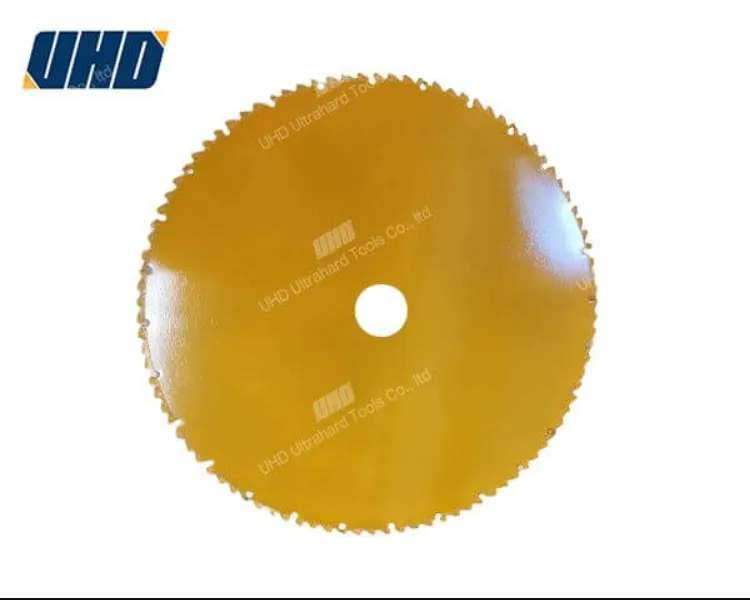
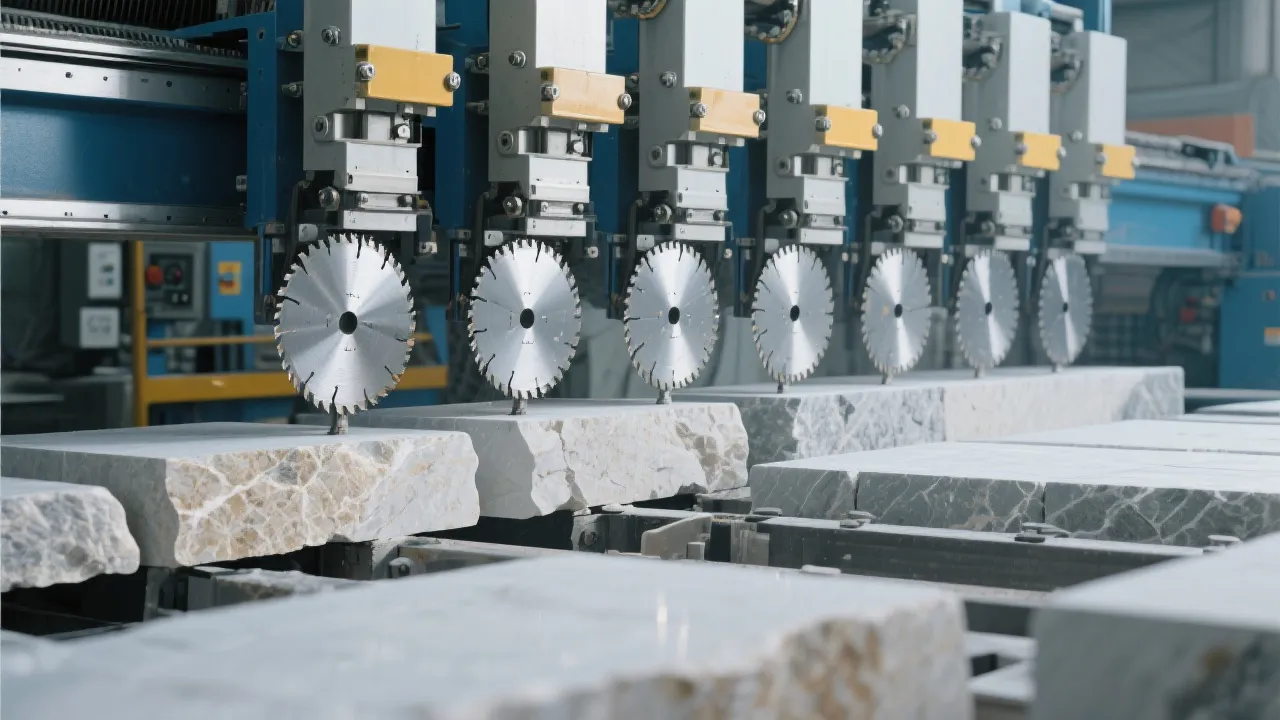
In the field of stone cutting, selecting the appropriate saw blade is crucial for achieving high - quality cutting results and improving production efficiency. Different types of stones, such as marble, granite, and ceramic tiles, have unique physical properties that require specific saw blade selection and cutting parameter adjustment. This guide will delve into these aspects to provide a comprehensive reference for stone cutting practitioners.
The microstructure of stones significantly affects the wear of cutting saw blades. Marble, a relatively soft stone, has a fine - grained structure. Its Mohs hardness is generally around 3 - 4. The softer nature of marble means that the saw blade wears at a relatively slower rate during cutting. However, due to its relatively low hardness, it is more prone to chipping and cracking, especially when the cutting parameters are not properly set.
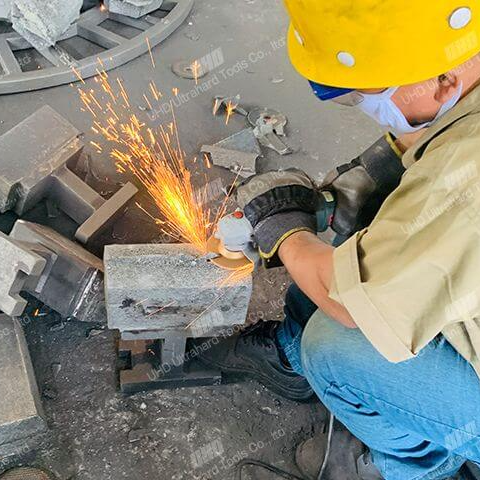
Granite, on the other hand, is a hard and dense stone with a Mohs hardness of 6 - 7. Its coarse - grained structure contains various minerals such as quartz, feldspar, and mica. During the cutting process, the high hardness and abrasive nature of granite cause rapid wear of the saw blade. The cutting edge of the saw blade is constantly subjected to high - intensity friction and impact, which requires the saw blade to have high wear - resistance and strength.
Ceramic tiles have a unique microstructure. They are usually made by high - pressure sintering, resulting in a dense and hard surface. The Mohs hardness of ceramic tiles is typically around 6 - 7, similar to granite. However, ceramic tiles often have a glazed surface, which adds to the complexity of cutting. The glaze layer can cause the saw blade to skid and increase the risk of chipping on the tile surface.
Marble is prone to chipping and cracking during cutting. This is mainly due to its relatively low hardness and brittleness. If the cutting speed is too fast or the pressure is too high, the marble may break along the cutting line. In addition, marble may have natural cracks and inclusions, which can further exacerbate the problem of chipping.
Granite cutting often faces the problem of excessive saw blade wear. The high hardness of granite requires the saw blade to have a high - quality diamond segment. If the saw blade is not suitable for granite cutting, it may lead to uneven cutting, rough surfaces, and even damage to the saw blade. Moreover, granite may have different grain sizes and mineral compositions in different regions, which also affects the cutting effect.
For ceramic tiles, the main problem is the chipping of the glazed surface. The glaze layer is relatively brittle, and improper cutting can cause the glaze to peel off, affecting the appearance and quality of the tile. In addition, the high - density structure of ceramic tiles also requires a saw blade with high cutting efficiency to ensure smooth cutting.
When cutting different stones, appropriate operation parameters are essential for achieving good cutting results. Here is a table of recommended operation parameters for different stones:
| Stone Type | Feed Speed (mm/min) | Pressure (N) | Cooling Method |
|---|---|---|---|
| Marble | 200 - 500 | 50 - 100 | Wet cutting |
| Granite | 100 - 300 | 100 - 200 | Wet cutting |
| Ceramic Tiles | 150 - 400 | 80 - 150 | Wet cutting |
Wet cutting is generally recommended for all three types of stones. Water can effectively cool the saw blade, reduce friction, and prevent the generation of dust, which is beneficial for both the saw blade life and the working environment.
For fragile and high - gloss stones such as some types of marble, special treatment techniques are required. Vibration - damping saw blades can be used to reduce the vibration during cutting, which helps to prevent chipping and cracking. In addition, water - cooling protection is crucial. By continuously spraying water on the cutting area, the temperature of the saw blade and the stone can be kept low, and the cutting quality can be improved.
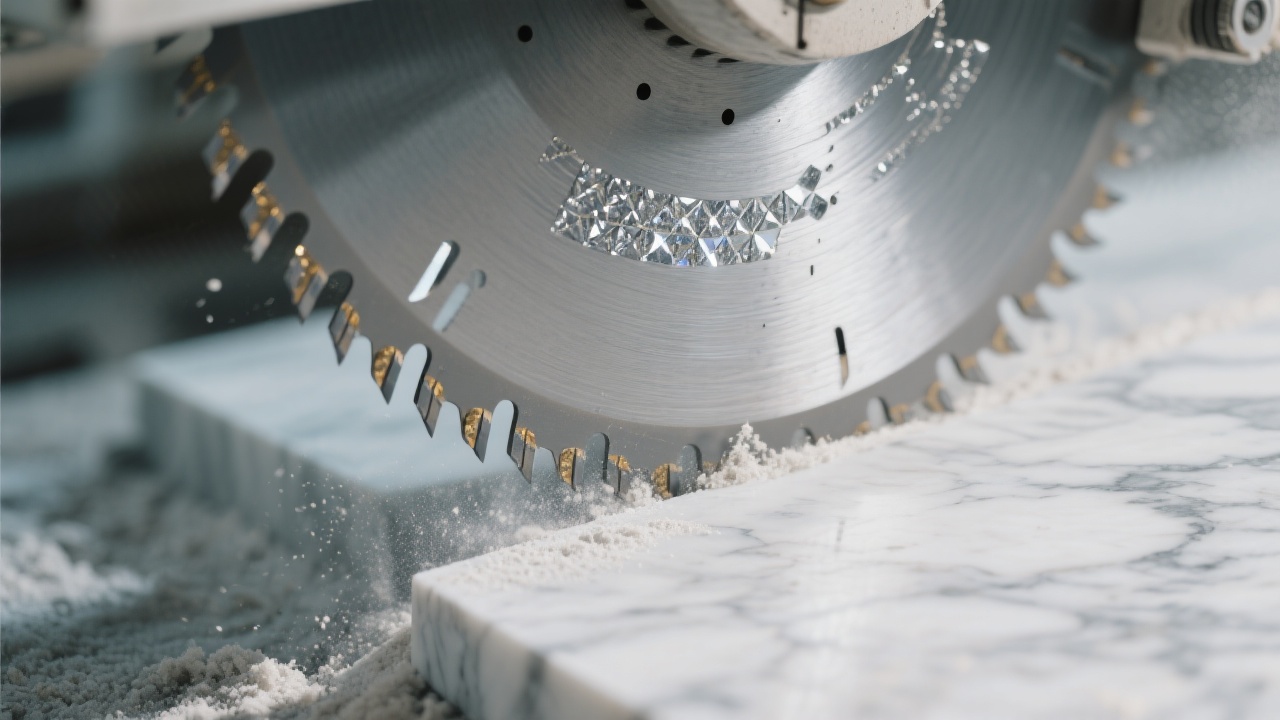
When using vibration - damping saw blades, it is necessary to ensure that the saw blade is properly installed and balanced. The water - cooling system should also be adjusted according to the cutting speed and pressure to ensure effective cooling.
In a large - scale stone processing project, a company was cutting granite for a high - end building exterior wall. At the beginning, they used a common saw blade with inappropriate cutting parameters. As a result, the saw blade wore out quickly, and the cutting surface was rough, which did not meet the quality requirements. After consulting the experts and referring to this guide, they selected a high - quality diamond saw blade suitable for granite cutting and adjusted the cutting parameters according to the recommended values. They also adopted the wet - cutting method with proper water - cooling. As a result, the saw blade life was extended by 30%, and the cutting quality was significantly improved, with a smooth and even cutting surface.
In another project of cutting ceramic tiles for a bathroom renovation, the contractor faced the problem of chipping on the glazed surface. By using a vibration - damping saw blade and following the recommended cutting parameters, they were able to reduce the chipping rate from 15% to less than 5%, greatly improving the overall quality of the project.
A "Three - Step Judgment Method" can be used to select the appropriate saw blade. First, determine the type of stone, including its hardness, density, and microstructure. Second, consider the cutting requirements, such as the cutting speed, precision, and surface quality. Third, choose the saw blade based on the above two factors and the manufacturer's recommendations.
There is also a "Chip - Prevention Mantra": "Slow speed, proper pressure, and good cooling". This simple mantra summarizes the key points of preventing chipping during stone cutting. Common mistakes include using an inappropriate saw blade for the stone type, setting incorrect cutting parameters, and neglecting the importance of cooling.
In conclusion, selecting the right saw blade and using appropriate cutting parameters are essential for stone cutting. By following the guidance in this article, stone cutting practitioners can improve production efficiency, enhance product quality, and extend the service life of saw blades. If you are looking for high - quality stone cutting saw blades, click here to explore UHD's range of products.


 granite cutting precision
saw blade vibration
cutting deviation solution
diamond saw blade usage skills
UHD saw blade
Brazed diamond saw blade
Stone cutting saw blade
Diamond saw blade selection guide
400mm saw blade
Dry and wet cutting saw blade
granite cutting blade wear
diamond saw blade segment wear
granite cutting troubleshooting
diamond blade bond matrix optimization
saw alignment and coolant optimization
Brazed diamond saw blade
High - hardness material cutting
Heat sink design
Vibration - damping cutter head
Wet and dry cutting processes
Brazed diamond saw blade technology
400mm brazed diamond saw blade
Building cutting tool selection
Hard material cutting solutions
Diamond saw blade wear resistance
granite cutting precision
saw blade vibration
cutting deviation solution
diamond saw blade usage skills
UHD saw blade
Brazed diamond saw blade
Stone cutting saw blade
Diamond saw blade selection guide
400mm saw blade
Dry and wet cutting saw blade
granite cutting blade wear
diamond saw blade segment wear
granite cutting troubleshooting
diamond blade bond matrix optimization
saw alignment and coolant optimization
Brazed diamond saw blade
High - hardness material cutting
Heat sink design
Vibration - damping cutter head
Wet and dry cutting processes
Brazed diamond saw blade technology
400mm brazed diamond saw blade
Building cutting tool selection
Hard material cutting solutions
Diamond saw blade wear resistance









.png?x-oss-process=image/resize,h_100,m_lfit/format,webp)
.png?x-oss-process=image/resize,h_100,m_lfit/format,webp)
.png?x-oss-process=image/resize,h_100,m_lfit/format,webp)