
Are you struggling with low efficiency in stone cutting? Frequent saw blade wear can significantly slow down your production process. In this article, we'll unveil three practical techniques to enhance the lifespan of your saw blade and improve cutting precision. These techniques are suitable for technicians and operators in stone processing plants, helping you achieve a dual improvement in production efficiency and safety.
In the stone processing industry, several common issues plague manufacturers. Saw blades wear out quickly, cutting speeds are slow, there's excessive noise, and safety is often compromised. For example, in many factories, frequent tool changes due to blade wear lead to machine downtime, which directly affects project deadlines. This not only increases production costs but also reduces overall productivity.
One of the main reasons for rapid saw blade wear is high temperature. During the cutting process, friction generates heat. If the heat cannot be dissipated effectively, the saw blade's temperature can rise significantly. Studies have shown that without proper heat dissipation, the temperature of a saw blade can increase by up to 50% compared to normal operating conditions. This high temperature can cause the blade to lose its hardness and sharpness, leading to faster wear.
Feed pressure is another critical factor. If the feed pressure is too high, it can put excessive stress on the saw blade, causing it to break or wear out prematurely. On the other hand, if the feed pressure is too low, the cutting efficiency will be severely affected. A proper balance of feed pressure is essential for optimal cutting performance.
The cutting speed also plays a crucial role. Using an incorrect cutting speed can result in uneven cuts, increased vibration, and more wear on the saw blade. It's important to match the cutting speed with the type of stone and the characteristics of the saw blade.
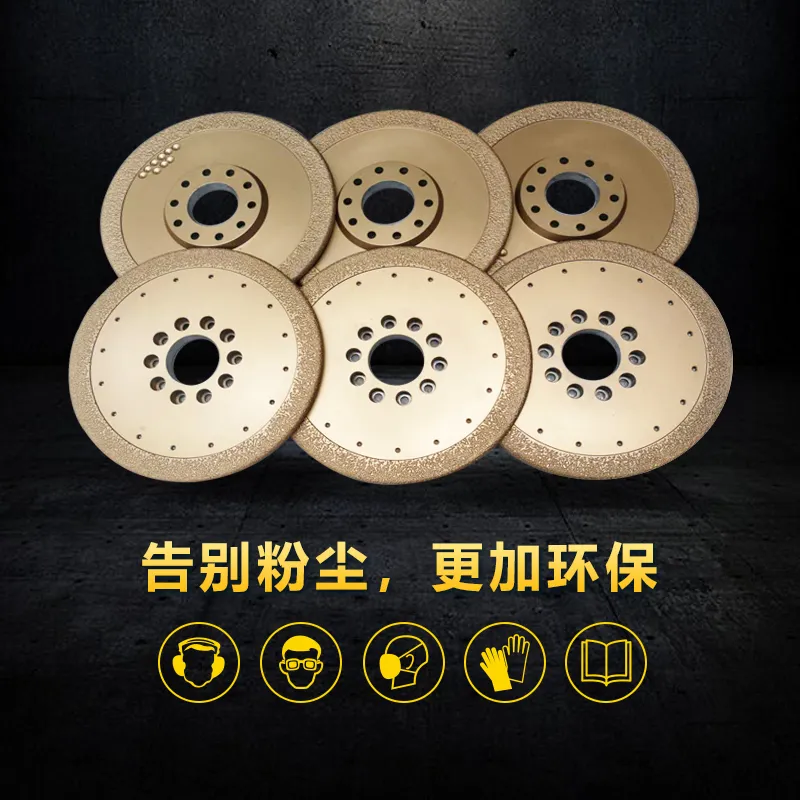
Modern saw blades, such as the UHD super-hard 400H brazed diamond saw blade, are designed with an efficient heat dissipation structure. This structure can reduce the temperature rise of the saw blade by up to 30%. By quickly dissipating heat, the saw blade can maintain its hardness and sharpness for a longer time, significantly extending its lifespan.
The high-strength matrix of the saw blade provides better stability and durability. It can withstand higher feed pressures and cutting forces without deformation or breakage. This allows for more precise and efficient cutting, even when dealing with hard and dense stones.
When using wet cutting, controlling the water flow angle is crucial. A proper water flow angle can effectively cool the saw blade and flush away the debris, reducing friction and wear. It's recommended to adjust the water flow angle according to the cutting direction and the type of stone.
As mentioned earlier, matching the rotation speed with the stone type and saw blade characteristics is essential. You can refer to the manufacturer's guidelines to determine the optimal rotation speed for different cutting scenarios. This will help you achieve better cutting results and prolong the life of the saw blade.
Improving safety and precision in stone cutting is not just about reducing accidents and improving product quality. It also has a significant impact on overall production efficiency. By using high-quality saw blades and following the correct cutting techniques, you can reduce downtime, increase productivity, and ultimately save costs.
Industry experience and test data have shown that implementing these improvements can lead to a 20% - 30% increase in production efficiency. This is a significant improvement that can make a big difference in your business.
So, have you encountered any cutting problems? Leave a message below and tell us about your experiences. We'd love to hear from you and help you find solutions.
Discover the Engineering Logic Behind Our High-Performance Saw Blades
 Diamond saw blade heat dissipation design
400mm saw blade cutting precision
Brazed diamond saw blade application
Metal processing tool maintenance
Difference between wet and dry cutting
granite cutting
saw blade selection
cutting precision improvement
edge chipping prevention
hard material cutting techniques
brazed diamond saw blades
stone cutting tools
diamond blade selection guide
ISO certified industrial blades
high-performance cutting solutions
tool failure diagnosis
metal machining downtime
diamond tool vibration issues
cutting parameter optimization
machine maintenance best practices
400mm brazed diamond saw blade
brazed saw blade maintenance
difference between wet and dry cutting
diamond saw blade performance
construction stone cutting tool
Diamond saw blade heat dissipation design
400mm saw blade cutting precision
Brazed diamond saw blade application
Metal processing tool maintenance
Difference between wet and dry cutting
granite cutting
saw blade selection
cutting precision improvement
edge chipping prevention
hard material cutting techniques
brazed diamond saw blades
stone cutting tools
diamond blade selection guide
ISO certified industrial blades
high-performance cutting solutions
tool failure diagnosis
metal machining downtime
diamond tool vibration issues
cutting parameter optimization
machine maintenance best practices
400mm brazed diamond saw blade
brazed saw blade maintenance
difference between wet and dry cutting
diamond saw blade performance
construction stone cutting tool





.png?x-oss-process=image/resize,h_100,m_lfit/format,webp)
.png?x-oss-process=image/resize,h_100,m_lfit/format,webp)
.png?x-oss-process=image/resize,h_100,m_lfit/format,webp)


.png?x-oss-process=image/resize,h_800,m_lfit/format,webp)

