
In the realm of industrial cutting tools, the demand for precision, durability, and consistent performance has never been higher. Among these tools, brazed diamond saw blades stand out for their superior cutting capabilities, especially when manufactured under stringent quality standards such as ISO certification. Understanding the technical nuances between reinforced brazing and traditional welding methods, alongside material and design choices, is essential for procurement professionals seeking optimized cutting solutions.
Reinforced brazing technology enhances the bond strength between diamond particles and the blade substrate by employing a precise metallurgical bonding process. This results in a significantly higher diamond retention rate—often exceeding 95% after 100 hours of continuous use—compared to traditional welding, which typically retains around 75%-80%. The improved bond reduces diamond particle fall-off, directly increasing blade lifespan by 25% to 40%, depending on application conditions.
Moreover, reinforced brazed blades offer superior heat resistance and minimal thermal deformation, enabling them to operate efficiently under high-speed cutting scenarios where traditional welds may crack or degrade prematurely.
The substrate composition plays a pivotal role in blade durability and cutting precision. High-grade alloy steel with optimized carbon and chromium content enhances wear resistance and stiffness, minimizing deformation under mechanical stress. For example, alloy formulations with 1.2%-1.5% carbon and 12%-14% chromium content improve hardness to approximately 60 HRC, translating to a 15% increase in operational stability versus standard substrates.
Blade diameter is another critical design parameter influencing cutting efficiency and suitability for specific applications. Larger diameters (300-400 mm) provide greater cutting capacity for thick or dense materials, while smaller diameters (100-200 mm) enable precision cuts with lower power consumption. Correct diameter selection also impacts vibration levels and heat buildup, with optimized sizing reducing both by up to 20% based on field studies.
| Parameter | Reinforced Brazed Blade | Traditional Welded Blade |
|---|---|---|
| Diamond Retention Rate (%) | ≥ 95% | 75%-80% |
| Heat Resistance | High | Moderate |
| Operational Lifespan | +25% to 40% improvement | Baseline |
| Substrate Hardness (HRC) | Approx. 60 | 45-50 |
ISO 9001 certification acts as a globally recognized benchmark for quality management systems within manufacturing. For brazed diamond saw blades, ISO certification ensures adherence to rigorous design, production, and inspection protocols, which directly translates into consistent product quality and reliability.
Procurement specialists should verify supplier credentials by assessing valid ISO certificates, checking for traceability in materials, and performing third-party quality audits whenever possible. Beware of counterfeit or non-certified products claiming compliance; real ISO-certified blades provide official documentation with audit reports and continuous quality monitoring data.
Proper maintenance extends the effective lifespan of brazed diamond saw blades and ensures safe operation. Key steps include:
Studies indicate that implementing these practices can improve blade lifespan by up to 30%, while reducing operational downtime.
Combining technical performance insights, material quality, ISO certification verification, and maintenance planning enables purchasing professionals to optimize their selection of brazed diamond saw blades. Such an integrated approach not only enhances cutting efficiency but also reduces total cost of ownership and downtime.
For enterprises targeting competitive advantages, sourcing from ISO-certified manufacturers specializing in reinforced brazing technology is a strategic imperative.
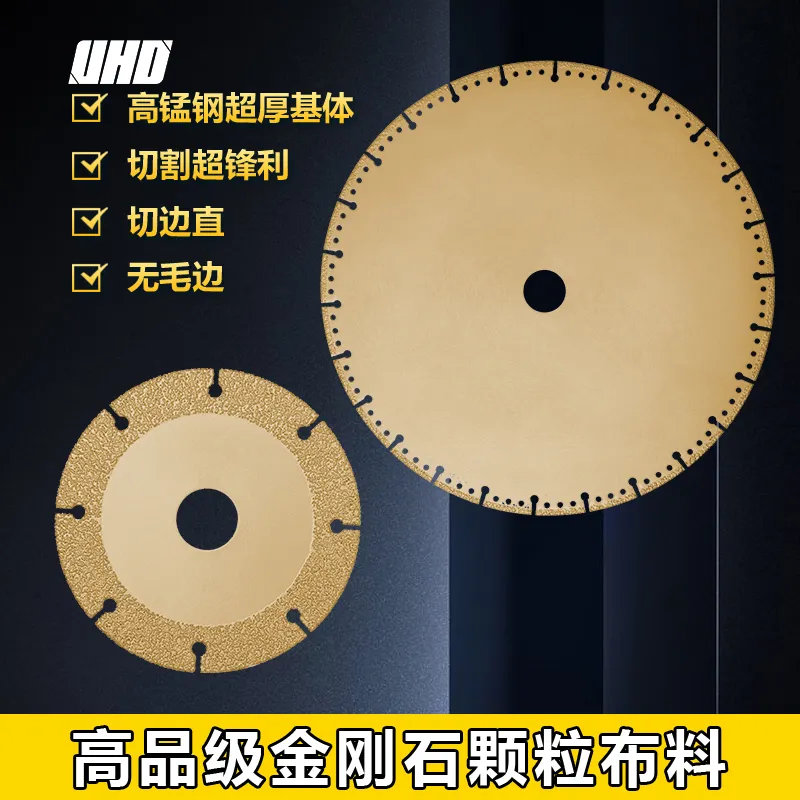


 Diamond saw blade selection misunderstandings
Diamond saw blade usage skills
UDS010 saw blade application guide
Cutting material matching
Efficient cutting solutions
diamond blade maintenance tips
wet vs dry cutting
extend diamond blade life
construction tool care
brazed diamond blade usage
Brazed diamond saw blade
Granite precision cutting
Saw blade vibration reduction technology
Feed rate control
Fixture fixing skills
diamond blade vibration control
tile cutting precision
anti-vibration blade design
hard material cutting optimization
cutting stability improvement
brazed diamond blade maintenance
hard material cutting techniques
diamond blade lifespan extension
cutting precision improvement
industrial cutting tools
Diamond saw blade selection misunderstandings
Diamond saw blade usage skills
UDS010 saw blade application guide
Cutting material matching
Efficient cutting solutions
diamond blade maintenance tips
wet vs dry cutting
extend diamond blade life
construction tool care
brazed diamond blade usage
Brazed diamond saw blade
Granite precision cutting
Saw blade vibration reduction technology
Feed rate control
Fixture fixing skills
diamond blade vibration control
tile cutting precision
anti-vibration blade design
hard material cutting optimization
cutting stability improvement
brazed diamond blade maintenance
hard material cutting techniques
diamond blade lifespan extension
cutting precision improvement
industrial cutting tools






.png?x-oss-process=image/resize,h_100,m_lfit/format,webp)
.png?x-oss-process=image/resize,h_100,m_lfit/format,webp)
.png?x-oss-process=image/resize,h_100,m_lfit/format,webp)


