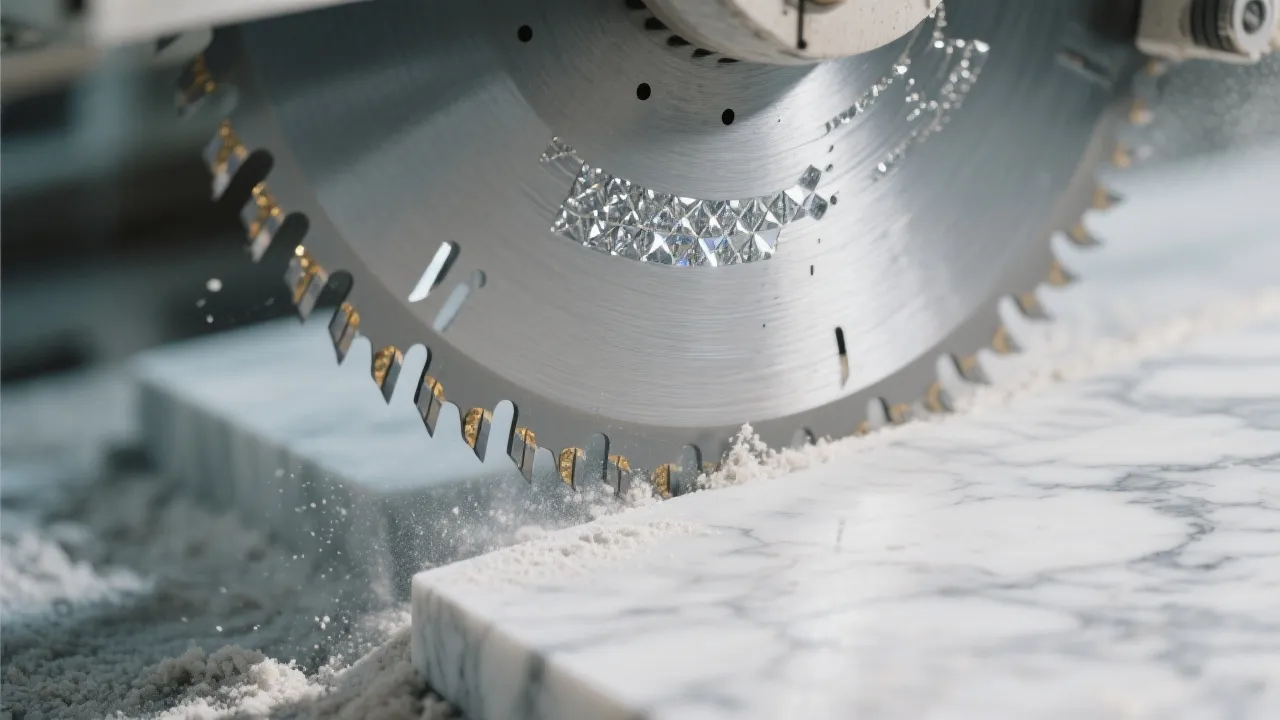
When you cut granite, you’re not dealing with “just hard stone”—you’re fighting a mix of high Mohs hardness minerals (often quartz 6.5–7) plus abrasive crystal structures that behave like sandpaper at industrial speed. If your diamond cutting segments are wearing down quickly, it’s rarely “bad luck.” It’s usually a measurable mismatch between diamond exposure rate, bond strength, cutting parameters, and machine condition.
Below you’ll find a practical, technician-style breakdown—what you should look for, what causes it, and what you can change today to stabilize output, improve surface finish, and extend blade life.
Before you adjust anything, identify the dominant symptom. Granite often triggers multiple issues at once, but one is usually the root driver.
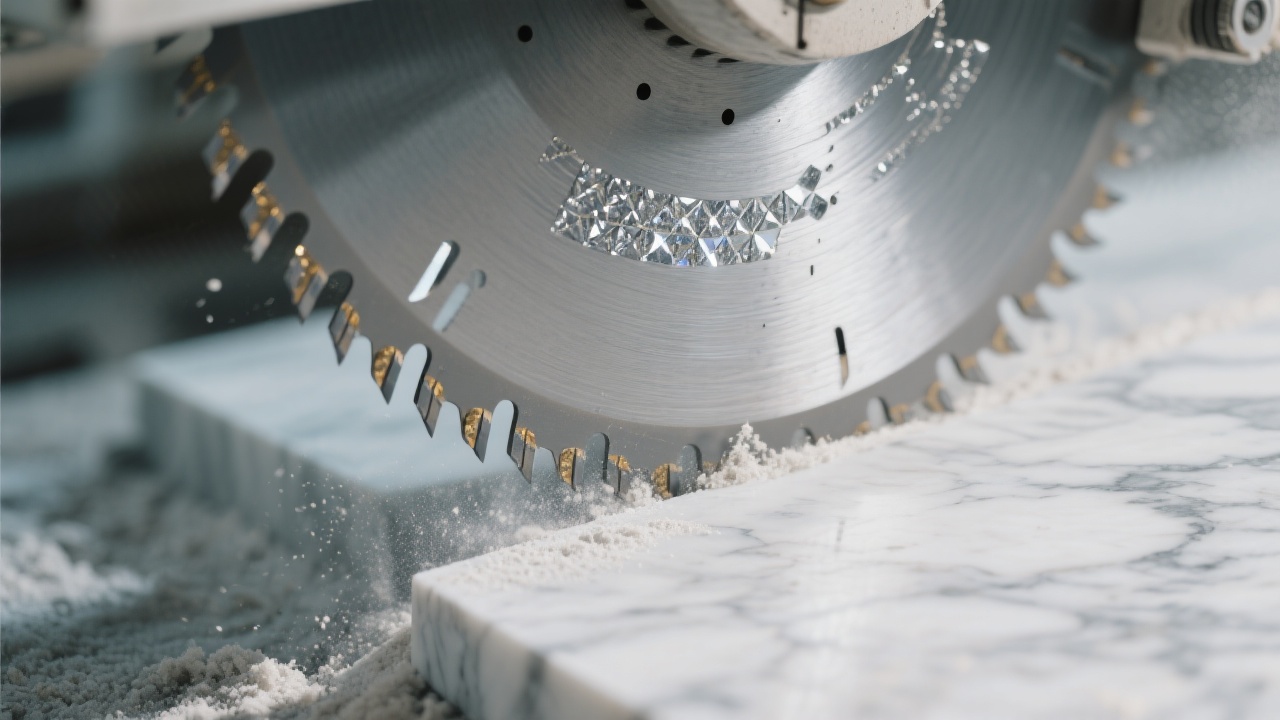
If you’re trying to compensate by pushing harder (higher feed) or reducing water to “see the cut,” you’ll usually accelerate wear. Granite is unforgiving: once the segment temperature climbs, the bond weakens and diamond pull-out increases—wear becomes exponential.
Fast wear is rarely caused by a single factor. It’s typically a chain reaction: wrong bond → unstable diamond exposure → heat → faster bond erosion → more heat. Use the causes below as a checklist.
Granite needs enough effective cutting points. If concentration is low, each diamond bears more load, causing micro-fractures and premature pull-out. In many shop cases, upgrading concentration and choosing a tougher diamond grade can lift practical blade life by 20–45% on quartz-rich granite, assuming the machine is stable.
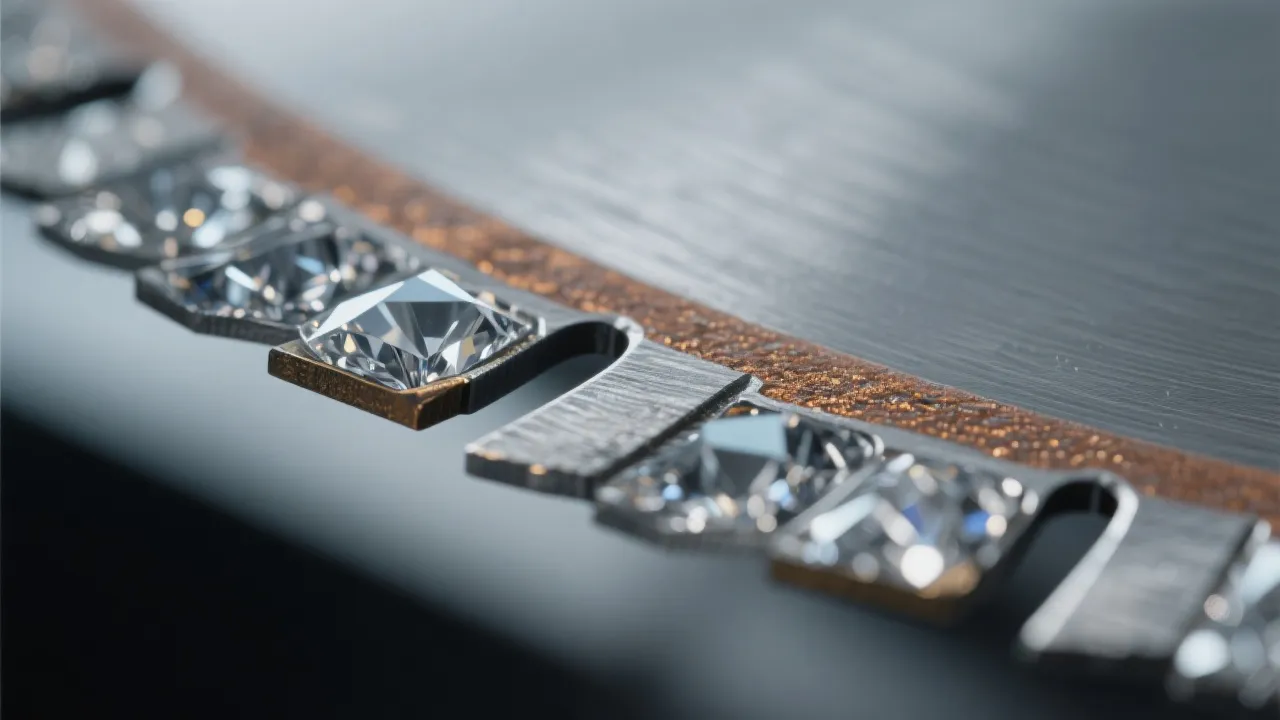
A soft bond can be correct for very hard stones, but it must still hold diamonds long enough to do work. When retention is weak, you get diamond shedding—the segment “looks sharp,” yet it disappears fast.
Typical contributors: alloy composition not tuned for heat, insufficient sintering density, or poor wetting in brazed structures. You’ll often see wear that is fast but “clean,” without obvious glazing.
A bond that’s too hard can trap diamonds. Instead of exposing new sharp points, the segment face polishes. Cutting turns into friction, and temperature rises quickly. Once segment temperature gets high enough, you can see a life drop of 15–35% in a single shift, plus higher risk of blade wobble.
Too aggressive feed overloads diamonds; too low feed increases rubbing and heat. As a practical reference for many bridge saw operations on granite, segment performance often stabilizes when your setup lands around:
Water is not only for cooling—it’s also for chip evacuation. If slurry builds up, diamonds regrind abrasive fines and wear accelerates. Many factories see immediate improvement by ensuring steady flow, correct nozzle direction to the kerf, and basic filtration. As a practical baseline, keeping process water near 15–30°C and avoiding clogged nozzles can reduce heat-related wear events significantly.
Even a premium blade fails on a bad machine. If flange faces aren’t clean/flat, or spindle runout is high, the blade “hunts” laterally. That creates uneven segment loading and localized overheating.
Many stone shops target ≤0.05 mm radial runout as a practical goal for stable cutting. If you’re above that, you’ll often see one side of segments wearing faster, plus cut deviation.
Treat this like a process optimization, not a one-off fix. Start with the easiest high-impact steps (machine + cooling), then dial in parameters, then fine-tune the segment specification.
Step 1: Verify machine basics
Flange cleanliness, spindle runout, blade mounting torque, table level.
Step 2: Check cooling & slurry
Nozzle direction, flow stability, filtration, water temperature.
Step 3: Adjust parameters
RPM, feed, depth per pass; keep motor load stable.
Step 4: Match segment spec
Diamond grade/concentration, bond hardness, retention strength.
Loop back after 30–60 minutes of cutting data: segment face condition, amperage trend, cut straightness, and surface finish.
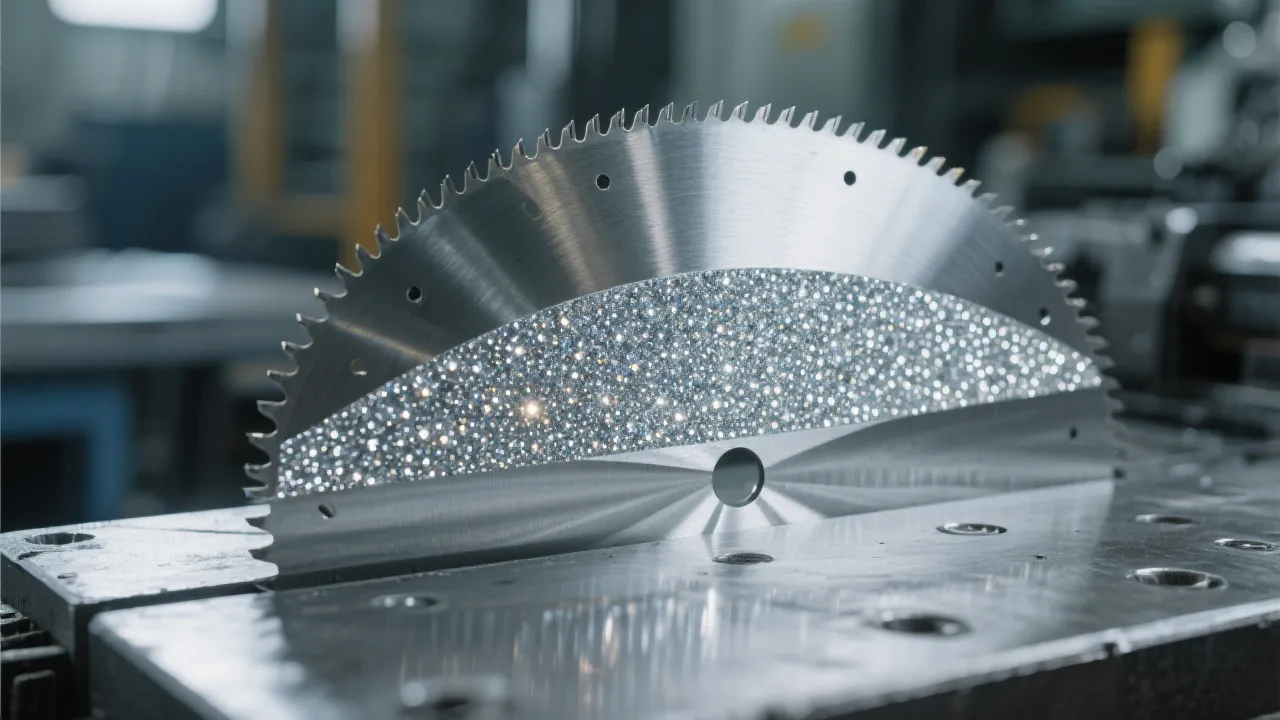
If your segments disappear quickly on granite, you typically need stronger diamond retention and a bond that self-sharpens at the right pace. In practice, that means optimizing the matrix alloy so diamonds fracture predictably rather than pull out early. If you’re sourcing blades, ask suppliers to confirm:
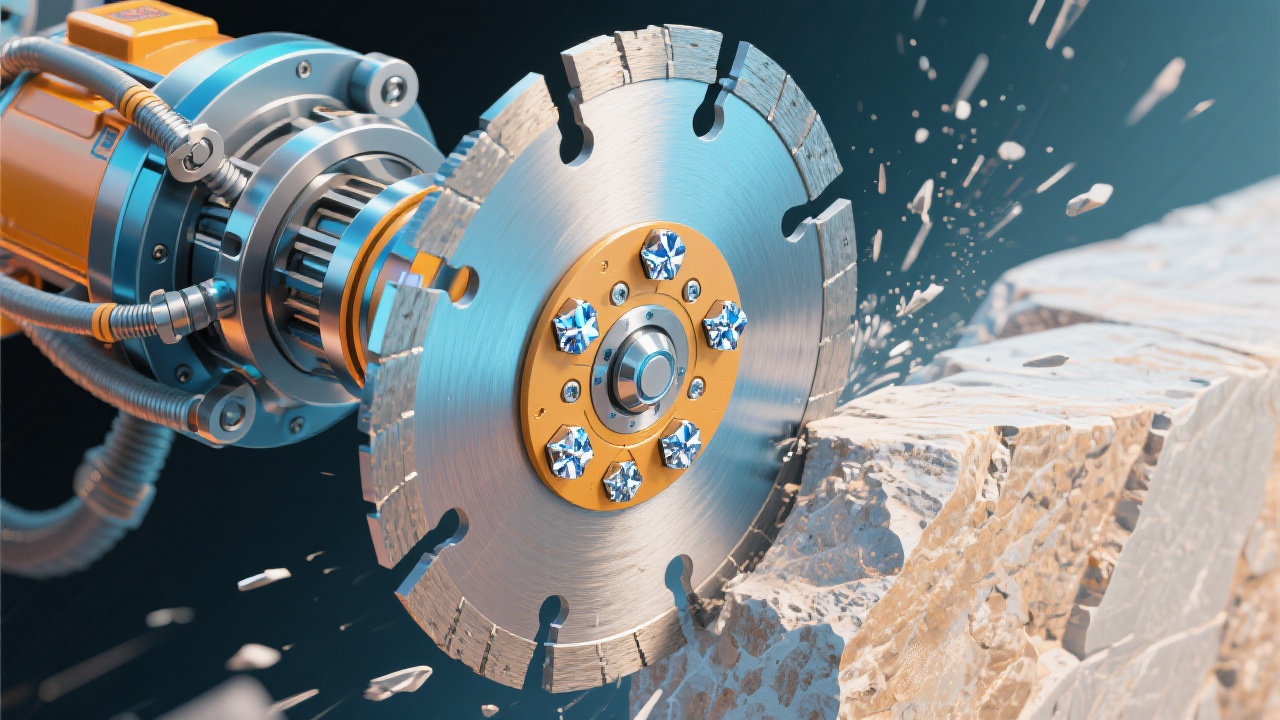
Granite rewards steady, controlled cutting. Use your machine’s amperage/current as a real-time proxy for segment stress:
A common shop mistake is good flow but poor targeting. Your water must reach the diamond contact zone and flush fines out of the kerf. If slurry turns thick, you’re effectively grinding your own abrasive paste. Practical upgrades that often pay back quickly:
If you only fix one thing this month, fix alignment. When the saw is out of level or the spindle has runout, segments experience cyclic loading—wear becomes uneven, noise increases, and the blade starts to “fight” the stone. A practical calibration routine:
These aren’t theory-heavy. They’re the small habits that keep granite cutting stable when your schedule is tight.
If you’re pushing deep passes, try a step cutting approach: you reduce instantaneous load, control heat, and minimize micro-chipping on brittle, quartz-heavy granite. Many shops report noticeably steadier amperage and a cleaner edge, especially on thick slabs and engineered quartz-like materials.
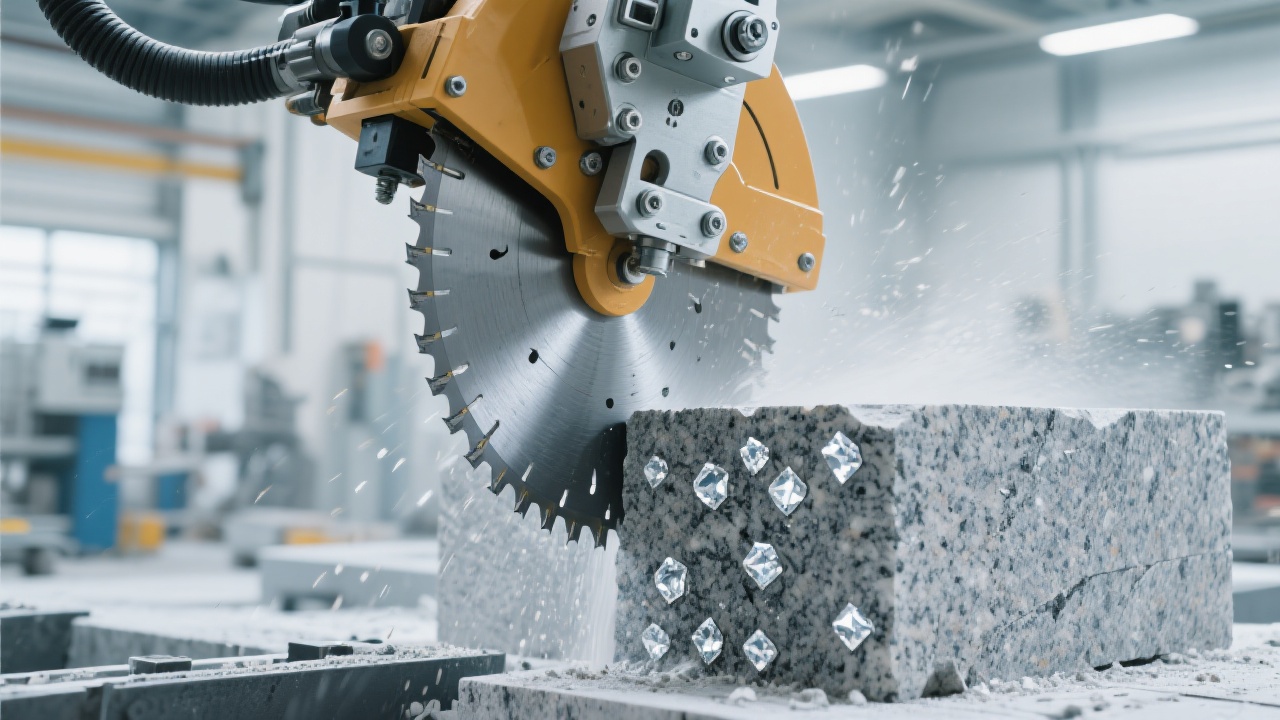
Dressing isn’t a “last resort.” If you wait until the blade is already overheating, you’ve already paid the wear penalty. A simple rule many experienced operators use: dress as soon as you see sustained cutting slowdown + a shiny segment face. In stable operations, controlled dressing can help restore sharpness and prevent the heat spiral that destroys retention.
Suppose your blade life on quartz-rich grey granite drops from about 220–260 m² per blade to 140–170 m². In many cases, you can recover a large part of that loss by combining: (1) runout control to near 0.05 mm, (2) improved kerf water delivery, and (3) a bond tuned for granite self-sharpening. The key is tracking one metric daily—square meters per blade—and adjusting one variable at a time.
If feed is too low, the segment can start rubbing instead of cutting—heat rises, the bond softens, and diamonds pull out faster. Check for glazing, confirm water reaches the kerf, and consider a brief dressing cycle to restore sharp cutting points.
Dirty or warped flanges and excessive runout. Even small debris can tilt the blade, forcing one side of segments to do most of the work. Clean contact surfaces and verify runout before blaming segment quality.
If the segment face is glossy and cutting slows, the bond is likely too hard (glazing). If segments disappear quickly without glazing, retention may be too weak or the bond too soft for your parameter load. Granite often needs a balanced design: strong retention with controlled self-sharpening.
Yes—because slurry recirculation changes the cutting environment. High quartz fines in the water increase abrasion and heat. Better filtration and stable flow often reduce random overheating and improve life consistency between shifts.
If your priority is stable output on hard, quartz-rich granite, your blade needs more than “sharp diamonds”—it needs retention, heat control, and reliable cutting behavior shift after shift.
Learn about YODE Superhard 400H Brazed Diamond Saw Blade and unlock a high-efficiency granite cutting solutionTip: When you inquire, share your granite type, blade diameter, machine model, RPM/feed range, and whether you see glazing or diamond shedding—so you can match the bond and cutting mode faster.
 400mm diamond saw blade
precision cutting technology
diamond blade for stone
high manganese steel saw blade
CE certified cutting tools
wet cutting vs dry cutting
stone cutting techniques
diamond saw blade application
granite cutting method
tile cutting guide
400mm diamond blade cutting techniques
brazed diamond blade maintenance
stone cutting efficiency optimization
dry wet cutting blade application
diamond blade lifespan extension
brazed diamond saw blade technology
construction cutting tools
hard material cutting solutions
400mm diamond saw blade
cooling noise reduction
hard material cutting
brazed diamond blade
wet cutting process
dry cutting operation
cooling design
400mm diamond saw blade
precision cutting technology
diamond blade for stone
high manganese steel saw blade
CE certified cutting tools
wet cutting vs dry cutting
stone cutting techniques
diamond saw blade application
granite cutting method
tile cutting guide
400mm diamond blade cutting techniques
brazed diamond blade maintenance
stone cutting efficiency optimization
dry wet cutting blade application
diamond blade lifespan extension
brazed diamond saw blade technology
construction cutting tools
hard material cutting solutions
400mm diamond saw blade
cooling noise reduction
hard material cutting
brazed diamond blade
wet cutting process
dry cutting operation
cooling design







.png?x-oss-process=image/resize,h_100,m_lfit/format,webp)
.png?x-oss-process=image/resize,h_100,m_lfit/format,webp)
.png?x-oss-process=image/resize,h_100,m_lfit/format,webp)