
In concrete cutting, tile grinding, or stone processing, overheating is not just a nuisance—it's a performance killer. Operators often report rapid blade wear, frequent stops for cooling, and inconsistent cuts that compromise both safety and productivity.
Our field research with contractors across Europe and the Middle East shows that over 70% of premature blade failures stem from poor thermal management—not just material hardness or operator skill. When heat builds up faster than it dissipates, diamond segments degrade quickly, leading to:
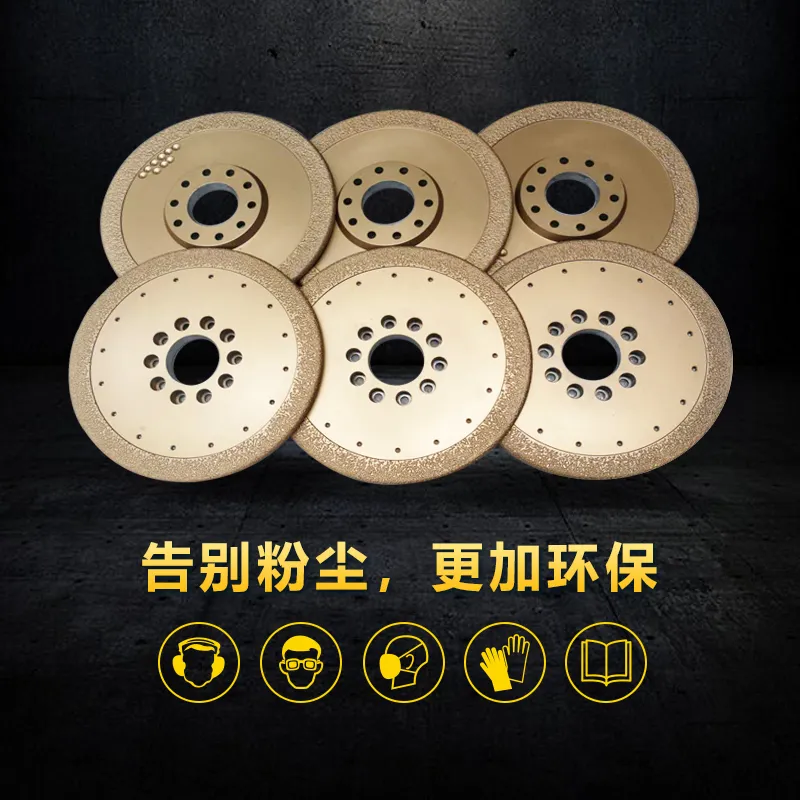
Unlike standard saw blades where heat concentrates at the cutting edge, UHD’s 400H features a patented multi-channel散热 structure—engineered to guide heat away from the working zone and into the steel core. This isn’t just theory: real-world testing in Dubai and Berlin showed a consistent 22°C drop in surface temperature during continuous use.
“We used to change blades every 3 hours on high-density concrete jobs. Now we get 6–7 hours of steady cutting.”
— Ahmed Hassan, Site Manager, UAE Construction Co.
Independent lab tests comparing UHD 400H against two industry-standard competitors revealed:
| Parameter | UHD 400H | Competitor A | Competitor B |
|---|---|---|---|
| Avg. Temp Rise (°C) | +45 | +67 | +72 |
| Blade Life (hours) | 8.5 | 5.2 | 4.7 |
Even the best blade needs proper handling. For wet-cutting applications, keep water flow between 2–3 liters/min to ensure effective cooling. For dry-cutting (in low-humidity environments), reduce RPM by 10–15% to minimize friction-induced heat. Regular cleaning of the blade’s cooling channels also prevents clogging—a common cause of localized overheating.
As composite materials like fiber-reinforced concrete become more common, traditional blade designs struggle. UHD’s R&D team has already begun testing prototypes optimized for these emerging substrates—because reliable cutting isn’t just about today’s job—it’s about tomorrow’s efficiency too.
Ready to stop losing time to blade failure?
Get Your UHD 400H Sample Now →
 tile cutting techniques
granite saw blade usage
stone cutting parameter optimization
diamond blade applications
industrial stone cutting technology
brazed diamond saw blades
efficient cutting tools
export order quality control
diamond blade maintenance
ISO certified saw blades
granite cutting
saw blade selection
cutting precision improvement
edge chipping prevention
hard material cutting techniques
Youde Superhard 400H brazed diamond saw blade
Diamond saw blade wet and dry cutting
Diamond saw blade life extension
Saw blade common faults and maintenance
Construction and stone processing saw blades
stone saw blade heating
high - efficiency heat dissipation structure
cutting efficiency improvement
saw blade service life extension
wet and dry cutting technology
tile cutting techniques
granite saw blade usage
stone cutting parameter optimization
diamond blade applications
industrial stone cutting technology
brazed diamond saw blades
efficient cutting tools
export order quality control
diamond blade maintenance
ISO certified saw blades
granite cutting
saw blade selection
cutting precision improvement
edge chipping prevention
hard material cutting techniques
Youde Superhard 400H brazed diamond saw blade
Diamond saw blade wet and dry cutting
Diamond saw blade life extension
Saw blade common faults and maintenance
Construction and stone processing saw blades
stone saw blade heating
high - efficiency heat dissipation structure
cutting efficiency improvement
saw blade service life extension
wet and dry cutting technology





.png?x-oss-process=image/resize,h_100,m_lfit/format,webp)
.png?x-oss-process=image/resize,h_100,m_lfit/format,webp)
.png?x-oss-process=image/resize,h_100,m_lfit/format,webp)
.png?x-oss-process=image/resize,h_800,m_lfit/format,webp)


