In the field of stone processing, the diversity of materials presents unique challenges to the cutting process. Different materials, such as ceramics, marble, and granite, have distinct physical characteristics that demand specific cutting techniques and parameters.
Ceramics, for instance, are known for their brittleness. During the cutting process, they are prone to cracking and chipping. Marble, on the other hand, has sensitive textures. Improper cutting can lead to issues like edge chipping and surface scratches. Granite is a hard and dense material, which can cause significant wear on the saw blade and may result in burrs on the cut surface.
Let's take a look at some typical problems in the cutting process. Edge chipping is a common issue, especially when cutting marble. Burrs often occur when cutting hard materials like granite, and scratches can happen on the surface of any material due to improper cutting tools or techniques.
A stone processing factory faced a serious problem of marble edge chipping. The initial cutting parameters were not suitable for the marble's texture, resulting in a high rate of defective products. After analyzing the physical properties of marble, the factory adjusted the feed rate, pressure, and cooling method.
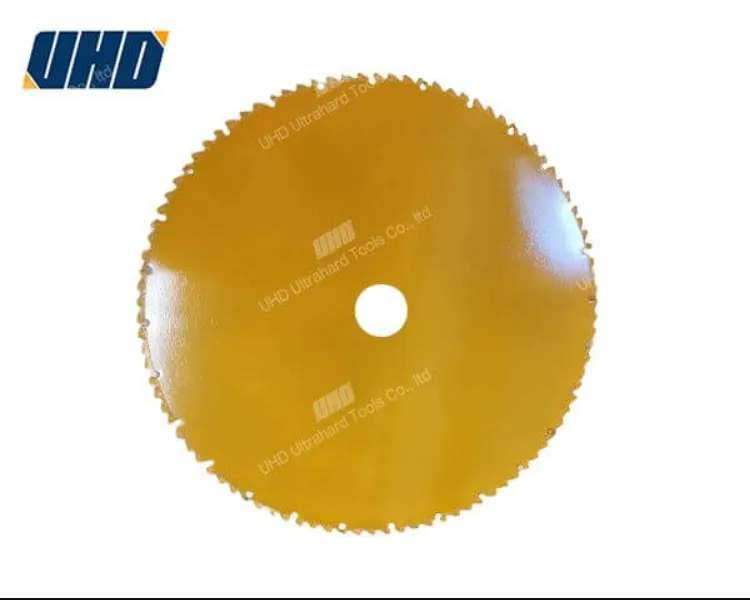
Before the adjustment, the defective rate of marble cutting was as high as 20%. After implementing the new parameters, the defective rate dropped to less than 5%. This significant improvement was not only due to the parameter adjustment but also the use of Youde Super - hard 400H brazed diamond saw blades.
Youde Super - hard 400H saw blades are designed with advanced brazing technology, which ensures high wear resistance. The unique heat dissipation structure effectively reduces the blade temperature during cutting, extending the blade's lifespan. Additionally, its vibration - damping and noise - reducing design provides a more stable cutting process.
These saw blades are suitable for both wet and dry cutting. In wet cutting, the cooling water can better cooperate with the saw blade's heat dissipation design. In dry cutting, the saw blade's high - temperature resistance and wear resistance still ensure a good cutting effect.
To quickly match the cutting parameters, we introduce the 'Three - step Judgment Method'. First, identify the material type and its basic physical properties. Second, observe the initial cutting effect, such as whether there are edge chipping, burrs, or scratches. Third, make small - scale parameter adjustments based on the observation results and evaluate the new cutting effect.
This method allows both novice and experienced stone processors to quickly find the most suitable cutting parameters, significantly extending the saw blade's lifespan and improving the product yield.
| Material | Feed Rate | Pressure | Cooling Method |
|---|---|---|---|
| Ceramics | Slow | Low | Wet |
| Marble | Moderate | Moderate | Wet |
| Granite | Fast | High | Wet |
"Since using Youde Super - hard 400H saw blades and adjusting the cutting parameters, our production efficiency has increased significantly, and the saw blade's lifespan has also been extended. It's really a great product." - An anonymous stone processing factory
You may be wondering, what kind of stone processing problems have you encountered? Whether you are a beginner or an experienced professional in stone processing, the knowledge and methods shared in this article can help you avoid pitfalls and improve efficiency.
Ready to enhance your stone cutting process? Explore the Youde Super - hard 400H saw blades and revolutionize your cutting experience!


 stone cutting efficiency
diamond blade optimization
wet vs dry cutting
vibration reduction in stone sawing
safe stone machining practices
granite cutting problems
marble cutting techniques
tile cutting dust control
diamond saw blade parameter adjustment
stone processing solutions
stone cutting
wet cutting
dry cutting
brazed diamond saw blade
cutting efficiency improvement
ultra-hard brazed diamond saw blade
industrial diamond cutting tools
400mm diamond blade
vibration reduction technology
heat dissipation design
tile cutting techniques
granite diamond blade selection
stone cutting parameter optimization
industrial diamond blade performance
diamond blade wear reduction
stone cutting efficiency
diamond blade optimization
wet vs dry cutting
vibration reduction in stone sawing
safe stone machining practices
granite cutting problems
marble cutting techniques
tile cutting dust control
diamond saw blade parameter adjustment
stone processing solutions
stone cutting
wet cutting
dry cutting
brazed diamond saw blade
cutting efficiency improvement
ultra-hard brazed diamond saw blade
industrial diamond cutting tools
400mm diamond blade
vibration reduction technology
heat dissipation design
tile cutting techniques
granite diamond blade selection
stone cutting parameter optimization
industrial diamond blade performance
diamond blade wear reduction






.png?x-oss-process=image/resize,h_100,m_lfit/format,webp)
.png?x-oss-process=image/resize,h_100,m_lfit/format,webp)
.png?x-oss-process=image/resize,h_100,m_lfit/format,webp)

.png?x-oss-process=image/resize,h_800,m_lfit/format,webp)